
Members
Leadership
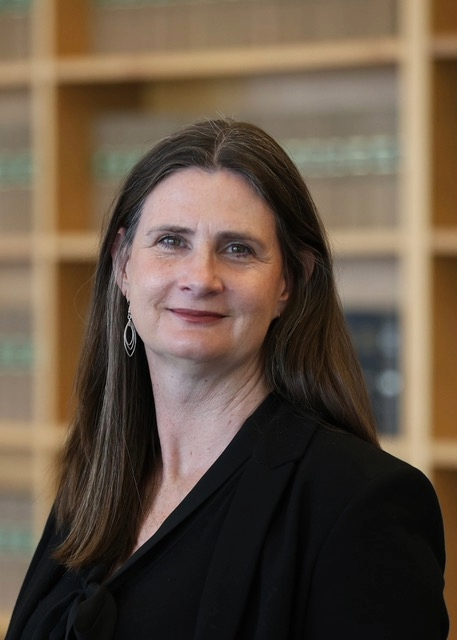 | Professor Kathleen Liddell (Director) Kathy specialises in medical law, emerging technologies and intellectual property. Her research focuses on a variety of issues such as patent protection in the field of pharmaceuticals and medical diagnostics, tackling antimicrobial resistance, and the regulation of medical research and complex technologies such as genetic testing and stem cell products. |
 | Professor Jeffrey Skopek (Deputy Director) Jeff’s research interests centre on advances in the biosciences that destabilize categories and concepts that play a foundational role in our law and ethics. He is currently working on projects that explore challenges posed by developments in personalized medicine, biobanking, and big data. |
Academic appointments
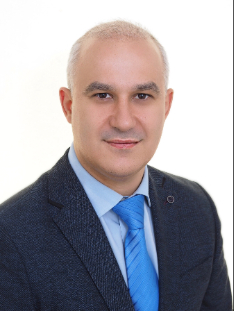 | Professor Mateo Aboy (Director of Research) Mateo specialises in technology law, intellectual property, and the regulation of emerging biomedical and digital innovations. His work explores patent law, regulation, and the legal status of AI- and quantum-enabled technologies, alongside empirical analyses of examination practices and innovation incentives across jurisdictions. More broadly, his research examines the legal and policy frameworks that shape how new technologies—particularly in biomedicine, artificial intelligence, and quantum information sciences—are protected, regulated and translated into practice. With a multidisciplinary background spanning engineering, law, and regulatory science, Mateo brings both scholarly and practical insight to questions at the intersection of innovation, governance, and technological development. |
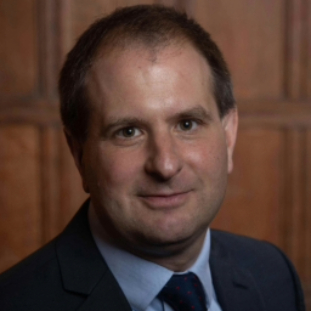 | David’s current research explores the nature of Data Protection especially as it intersects with the right to privacy, freedom of expression, freedom of information and freedom of research. His expertise covers issues such as the regulation of health data, "big data" applications in the health sector, e-health, and the use of personal data for medical research. |
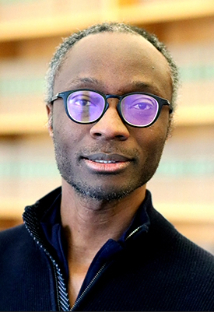 | Oke’s work in the field of medical law focuses on the relationship between the market and the NHS; for example ideas of “competitive neutrality” and the applicability of competition law to NHS service providers. |
 | Stephen's research focus is family law. With reference to medicine and the law, he has a particular interest in the law on assisted reproduction as it relates to legal parenthood, and in the law on children’s consent and refusal to consent to medical treatment in its relations to children’s autonomy and the concept of parental responsibility. |
 | Stevie is a College Lecturer in Law and Fellow/Bye-Fellow at Fitzwilliam and King's Colleges. Her research examines the ways in which public law impacts upon, and can provide protections for, especially vulnerable sections of society. |

| Jennifer is an Assistant Professor in Law and Technology in the Faculty of Law at the University of Cambridge. She is also Deputy Director of the Centre for Intellectual Property and Information Law (CIPIL). She is generally interested in critical, interdisciplinary work on questions of power, political economy, and the law around internet platforms and informational capitalism, technological supply chains and infrastructures, and AI and automated decision-making. |
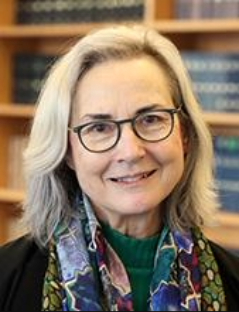 | Stephanie specializes in human rights, public law, and issues of medical law at the beginning and end of life. She is also interested in public health regulation, including the regulation of lifestyle risks, such as obesity-inducing foods, alcohol and plain packaging of tobacco products. |
Research scholars
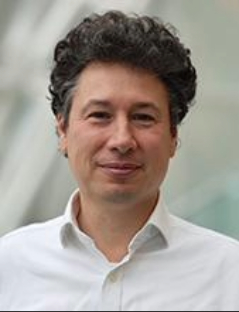 | Professor Michael Hopkins (Assistant Research Associate) Michael has over 25 years of experience researching the sociotechnical challenges of medical innovation. His current work focuses on the organisation of translational research, including measures to enhance university-industry collaborations, the emergence of the UK biotech sector including the financing R&D for drug discovery in small firms, and the policies needed to encourage R&D for novel antimicrobials to address AMR. |
 | Dr Ira Chadha-Sridhar (Hatton-WYNG Junior Research Fellow in Law, Medicine and Life Sciences)
|
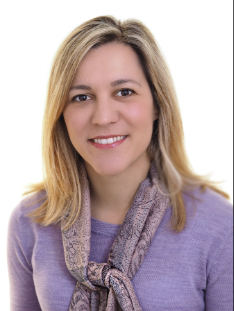 | Dr Cristina Crespo (Research Scholar) Cristina’s research interests include the patentability of information-age and biotech inventions, and specifically analysing the impact of recent US Supreme Court decisions affecting these inventions on patent prosecution strategy and innovation. Cristina’s research at the LML concerns the design and implementation of empirical legal studies involving biotech and gene-related patent protection as part of the research project Realising Genomic Medicine: Intellectual Property Issues. |
 | Rumiana's publications center around the communitarian norms of international law and their legal effects, which are the topic of her monograph. She is also interested in the international governance of science and new technologies in the field of biomedicine. She has published on the right to benefit from science, the international regulation of human germline editing and the anticipatory duties of States in the fields of human rights and biomedical law. Rumiana wrote an expert report for the Nuffield Council on Bioethics on the international regulation of germline editing and another one on human-rights based approaches to healthcare for the Council of Europe's Steering Committee for Human Rights in the fields of Biomedicine and Health. Rumiana is a member of the Co-Ordinating Committee of the Interest Group in International Bio Law at the European Society for International Law (ESIL), as well as a member of the Steering Committee and Theme Co-Lead on 'The Past, Present and Future of Reproduction' of Cambridge Reproduction. |
 | Laurence Childs Laurence is a Research Assistant at LML specialising in the political economy of innovative medicines regulation. He has previously worked in pharmaceutical market access and policy consulting, bringing industry insight to questions of policy design. He will begin his PhD in Health Policy & Health Economics at the London School of Economics in September 2026.
|
PhD Candidates
 | Matt specialises in medical law and ethics and family law, with a particular focus on emerging assisted reproductive technologies and modern family formation. His PhD research uses the sociological concept of liminality to analyse the legal and regulatory architecture governing the human body throughout the life cycle. |
 | Emma specialises in family law with a particular interest in judicial decision-making and children’s rights. Her PhD research explores the concept of Gillick competence, with a particular focus on how Australian judges apply the Gillick test in cases of children seeking gender-affirming care. |
 | Marno is a PhD candidate in the Centre and a Harding Distinguished Post Graduate Scholar researching pain and pain management from an ethico-legal perspective. He holds the degrees BA, LLB, LLM (Pret) and MA (King's) and has previously researched reproductive rights, for which he still holds a keen interest. |
 | Rob’s main area of interest is family law. His PhD research is exploring how judges make decisions about whether to remove children from their parents’ care during careproceedings. He is also particularly interested in the law and parenthood, including the regulation of assisted reproduction and surrogacy arrangements. |
Administration
 | Ms Natalie Kiilu (Research Projects Co-ordinator) Natalie Kiilu is the Research Projects Coordinator for the LML. Having recently completed her LLM, she focuses on issues around pharmaceutical innovation and improving access to essential medicines in low-resource settings such as sub-Saharan Africa. |